New Partnership with FlyBound
 Nikki Jane
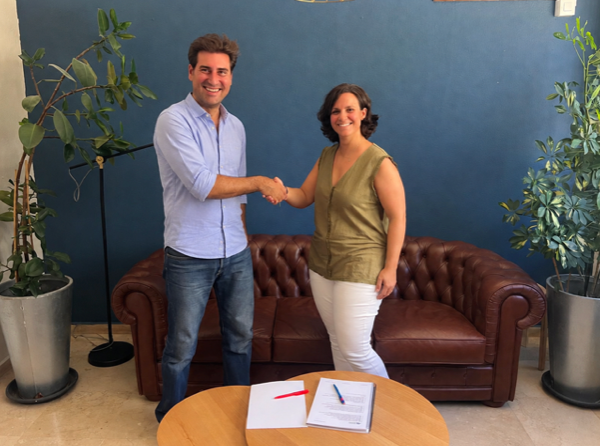
AV8 Testing & Training collaborates with FlyBound to support future pilots throughout their international training journey.
One Pilot, Two Systems: Navigating FAA and EASA Training
Choosing how and where to train as a professional pilot is a big decision. For someone starting out, there are questions about where to train, which qualifications to pursue, how to gain the right experience and, ultimately, where they want their career to take them.
But what if there isn’t one fixed route that works for every pilot?
This is the thinking behind FlyBound, an international pilot training programme that brings FAA and EASA training together within a single coordinated pathway. It is also the reason we are delighted to announce a new collaboration between AV8 Testing & Training and FlyBound, supporting pilots with Aviation English and ICAO English Language Proficiency testing as they progress through their training.
More on that later. First, we wanted to understand how FlyBound’s approach actually works in practice, so we spoke with Elías Fernández, one of FlyBound’s founders.

Starting with the pilot, not the programme
For many aspiring pilots, training can feel like a series of separate decisions: choose a flight school, obtain a licence, add ratings, build experience and work out what comes next.
FlyBound takes a different view, and it begins with a question about the pilot rather than a question about the course.
Q: Why was FlyBound created, and what problem was it designed to solve?
“Pilot training often asks the student to adapt to a predefined programme, even though students can have very different objectives, circumstances, budgets, previous experience and professional plans. We wanted to approach that from the opposite direction.
Instead of starting with a fixed training package and asking whether the student fits it, we first look at the student’s long-term objective and then determine how the training pathway should be structured around it.
That philosophy becomes particularly interesting when training involves both the FAA and EASA systems. Even within a single regulatory system there are already many possible routes - integrated or modular training, different sequencing options, previous flight experience and different career objectives. Once two systems are involved, the number of possible combinations becomes much greater.
For FlyBound, that flexibility is something to work with rather than a problem to avoid. If several valid routes exist, the objective should be to identify the one that offers the strongest balance of training quality, time efficiency and overall cost for that particular student.”
One pilot, different starting points
FlyBound offers two main pathways, depending on where a pilot is in their training.
The FlyBound Cadet Programme is designed primarily for aspiring professional pilots who are starting from zero or are at an early stage of their training. It combines FAA training in the United States with the EASA stages required for a European professional route. The programme is structured so that each stage connects with the next, while recognising that actual training times can vary depending on progress, examinations, weather, aircraft availability and other factors.
The EuroBound programme is aimed at pilots who have already started their journey. They may have completed part of their training, built flight time, obtained ratings or hold a non-EASA licence. Rather than starting again from the beginning, FlyBound assesses what the pilot already has and works out what remains to be completed on the route towards EASA qualifications.
Both programmes follow the same underlying principle: the pathway should reflect the pilot’s actual starting point and final objective.
FlyBound coordinates training across the United States and Europe, with the U.S. flying phase based in Florida and its Spanish coordination centred in Jerez de la Frontera.
Why combine FAA and EASA training?
For a future pilot, the idea of combining two regulatory systems may raise an obvious question: why not simply pick one and stay with it?
Q: If FAA and EASA are both highly respected training systems, why does FlyBound combine them instead of simply completing one system and converting later?
“FAA and EASA are both highly respected aviation systems and both can provide excellent pilot training. The reason for combining them is not that one is ‘better’ than the other. It is that they are different systems, designed around different regulatory environments and career pathways.
One of the most common mistakes is to compare only the price of an individual flight hour. Flying in the United States can be very cost-effective and factors such as fuel and aircraft operating costs can make the hourly rate attractive. But the hourly rate is only one part of the total equation.
You also need to consider how many hours and qualifications are required, which stages will support the student's final licence, what additional EASA training or examinations may still be needed later, and where the pilot ultimately intends to work. A route that looks cheaper at the beginning can become more expensive if it creates unnecessary duplication or a poorly planned conversion afterwards.
That is why FlyBound does not normally treat the U.S. phase as a completely separate FAA career pathway followed by a conversion as an afterthought. The training completed in the United States is planned from the beginning with the European stages in mind, so that the transition is as coherent and efficient as possible. There is also an important career-planning difference in the way flight experience is built. For U.S. Part 121 airline operations, pilots generally need an ATP or Restricted ATP certificate; the standard ATP route is based on 1,500 hours of flight time, with defined reduced-hour Restricted ATP routes in specific circumstances. Under EASA, the full ATPL also requires 1,500 hours, but a CPL holder can exercise co-pilot privileges in commercial air transport subject to the applicable licence, rating, theoretical knowledge, operator and aircraft requirements before holding the full ATPL.
That means the strategic question is not simply whether 1,500 hours matter - they do in both systems at the full ATPL level - but when, where and in what operational environment those hours can be accumulated. For some pilots focused on a European airline career, a significant part of that experience may ultimately be built while already working in a multi-crew airline environment.
The objective is therefore not to give a student two separate training programmes. It is to build one international pathway that uses the strengths of both systems in a way that supports the student's final professional goal.”
Looking at the whole journey
Pilot training involves a considerable number of decisions. Previous experience, medical certification, training sequence, location, available time, budget and long-term career plans can all influence the route, and they rarely sit in isolation from one another.
As Elías explains, a choice that looks attractive at one stage can sometimes create additional requirements further down the line. Mapping out the full pathway early makes those consequences visible while there is still time to plan around them.
None of this removes the complexity of international pilot training. There are still requirements that have to be met, and they take time. What it does mean is that each stage is planned with the overall objective in view.
That planning doesn’t stop once training begins, either. Weather, examinations, aircraft availability, personal circumstances and individual progress can all affect the original plan. A coordinated pathway gives the student a framework that can be reviewed and adapted as training develops, rather than a fixed schedule that starts to come apart at the first delay.
Which brings us to one of the most important, and most underestimated, elements of that pathway.
Preparing for more than the flight training
Becoming a professional pilot involves much more than learning to fly and passing the required examinations. Language sits underneath almost everything else in the training environment, from the first briefing to the final licence skills test.
It is also one of the areas where future pilots most often underestimate what will be asked of them, which is why FlyBound treats English as part of the wider preparation process rather than as a qualification to collect at the end.
Q: How important is English before flight training?
“English is fundamental, but we do not reduce it to whether a candidate holds a particular general English certificate.
Before training begins, what matters to us is whether the student can understand, communicate and learn effectively in English. Flight training becomes practical very quickly, particularly in the United States, and students need to be able to communicate with instructors, understand briefings and gradually adapt to aviation terminology and radio communications.”
In practice, FlyBound already considers a candidate’s practical English ability as part of its admission process. This is an internal assessment to help determine whether the candidate has a suitable foundation for training; it is not an official ICAO English Language Proficiency test, and it does not lead to a certificate or licence endorsement.
That distinction matters, and it is where our two organisations meet.
AV8 Testing & Training and FlyBound
The collaboration brings together two organisations with complementary roles in the pilot training journey.
FlyBound focuses on designing and coordinating the wider international training pathway, helping future pilots understand how the different stages of their training can fit together.
AV8 Testing & Training provides specialist support in ICAO English Language Proficiency testing and Aviation English training, so FlyBound students can access that expertise at the point where it becomes relevant to their individual pathway.
With both organisations based in Jerez de la Frontera (Spain), the collaboration also creates an opportunity to work closely together in supporting pilots as they progress.
As Elías puts it:
“Aviation English and ICAO Language Proficiency are different but complementary parts of the wider journey. Aviation English can be developed before and during training to help students become more comfortable with the language used in an aviation environment. ICAO Language Proficiency becomes relevant later within the pilot’s training and licensing journey and requires the appropriate formal assessment.
This is where the collaboration with AV8 Testing & Training fits naturally. AV8 specialises in Aviation English and ICAO English Language Proficiency testing, so people on both FlyBound and EuroBound pathways can access specialist support when they need it.”
For AV8 Testing & Training, the collaboration is an opportunity to support pilots from an earlier stage of their professional development. For FlyBound, it adds specialist language expertise to the pathway it builds around each student.
Looking ahead
If you’re considering professional pilot training and would like to explore the pathways available, you can read more about the Cadet Programme and EuroBound on the FlyBound website, or find out more about FlyBound and its approach to international pilot training.
And if you’re already on your training journey and need support with Aviation English or ICAO English Language Proficiency testing, AV8 Testing & Training is here to help when the time is right.
Categories: : Partnerships